If you are torn between Palo Alto and the broader Peninsula, you are asking the right question. For many buyers, the challenge is not whether they want a great home in a well-connected location. It is how to balance budget, home type, commute, and day-to-day lifestyle without losing sight of long-term value. This guide will help you frame that decision clearly so you can search with more confidence and less noise. Let’s dive in.
Start With the Real Tradeoff
Palo Alto sits at the premium end of this search. Redfin city guide data in the research report places Palo Alto’s median sale price at $3.48M, compared with $3.05M in Menlo Park, $1.98M in Redwood City, $1.94M in Mountain View, and $1.60M in San Mateo. If you are comparing these markets side by side, price is usually the first major dividing line.
That gap becomes even clearer when you focus on single-family homes. Palo Alto’s single-family median is $4.15M, compared with $3.54M in Menlo Park, $3.13M in Mountain View, $2.27M in Redwood City, and $2.20M in San Mateo. In practical terms, the same search criteria can lead to very different options depending on which city you center.
Understand What Palo Alto Buys You
Palo Alto housing stock
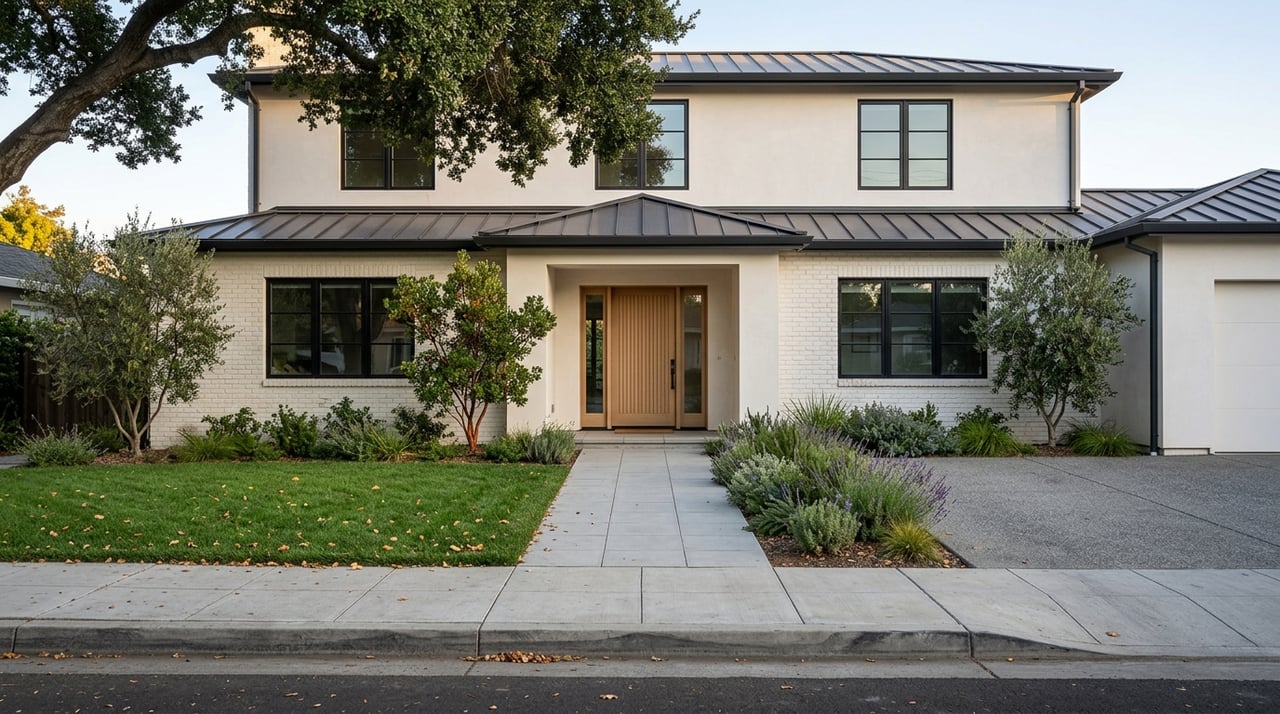
Palo Alto is still heavily oriented toward single-family homes. According to the city’s 2023-2031 Housing Element, about 61 percent of its 26,161 housing units are single-family, and the city is described as a built-out community with very little vacant developable land. That matters because limited supply tends to keep pressure on pricing and competition.
You will still find attached homes, smaller multifamily buildings, and larger apartment buildings in Palo Alto. Even so, detached homes remain the defining product type. If your vision of the Peninsula centers on a classic single-family setting, Palo Alto often matches that vision more directly than some nearby alternatives.
Palo Alto lifestyle and access
Palo Alto also stands out for its transit and downtown structure. The city has two Caltrain stops, and the Palo Alto Transit Center is served by five transit providers and has the second-highest Caltrain ridership on the corridor, according to city materials in the research report. That level of connectivity is part of why Palo Alto continues to attract buyers who want both convenience and a strong central core.
Downtown adds another layer to the value equation. The city describes University Avenue as the focal point of downtown and a destination for shopping, dining, and entertainment, with restaurants, coffee shops, theaters, art galleries, and locally owned retail. If you want a polished, main-street-style environment, Palo Alto tends to deliver that in a very consistent way.
Compare the Best Peninsula Alternatives
If Palo Alto is the benchmark, the next step is not simply asking which city is cheaper. It is asking which market best matches your priorities.
Menlo Park for a similar feel
Menlo Park is often the closest alternative in overall feel. It remains largely low-rise, but city data in the research report shows a more mixed housing structure than Palo Alto, with about 52 percent detached single-family homes, 8 percent attached single-family homes, 28 percent apartments in buildings with five or more units, and 12 percent in two- to four-unit buildings.
Price-wise, Menlo Park is still firmly in the luxury tier, but below Palo Alto. The median sale price is $3.05M, and the single-family median is $3.54M. For buyers who want a premium Peninsula setting with a walkable downtown and rail access, but want to widen their options slightly, Menlo Park is a strong place to compare.
Its downtown has a more intimate rhythm. The city describes downtown Menlo Park as walkable and close to Caltrain, with eateries, shops, outdoor dining, a Sunday farmers market, concerts, and a nearby park. If Palo Alto feels a bit more polished and regional, Menlo Park can feel quieter and more neighborhood-scaled.
Redwood City for broader value range
Redwood City gives you one of the broadest mixes of price points and home types in this comparison. The city’s 2023-2027 Consolidated Plan says 58 percent of residential structures are single-family overall, split between 46 percent detached and 12 percent attached, with the remainder spread across small multifamily, larger multifamily, and mobile homes.
That wider mix is reflected in pricing. Redwood City’s median sale price is $1.98M, with a single-family median of $2.27M, a condo or co-op median of $854,676, and a townhouse median of $1.39M. If you want more flexibility in how you enter the Peninsula market, Redwood City often creates more paths.
Lifestyle is part of the appeal too. Downtown Redwood City is positioned around the Caltrain stop in the heart of downtown, and the city says the area includes more than 75 restaurants plus hundreds of retail and personal services establishments. For buyers who want a more active downtown and a straightforward rail-centered routine, Redwood City offers a compelling contrast to Palo Alto.
Mountain View for transit-first buyers
Mountain View is worth considering if transit and attached housing are high on your list. The city’s Consolidated Plan says the housing stock is 41 percent single-family, 56 percent multifamily, and 3 percent mobile homes, with 47.2 percent of units in multifamily developments of five or more units.
That is important context when you look at pricing. Mountain View’s all-home median is $1.94M, but its single-family median is $3.13M. In other words, the lower headline number is shaped by the city’s larger share of condos and multifamily housing.
Transit is one of Mountain View’s strongest advantages. The city says its downtown station connects Caltrain, VTA light rail, VTA buses, and shuttles, making it one of the busiest and most convenient transit hubs in Silicon Valley. If your search is less about a detached-home-first lifestyle and more about connectivity, Mountain View can make a lot of sense.
San Mateo as a useful benchmark
San Mateo may not be your first stop if you begin with Palo Alto, but it is a smart benchmark. Its median sale price is $1.60M, with a single-family median of $2.20M and a condo or co-op median of $764,848. For many buyers, those numbers help clarify what the broader Peninsula can offer at a lower entry point.
Transit is a major part of the conversation here. The city says San Mateo is the only Peninsula city with three Caltrain stations and sits at the crossroads of two major highways. If your search values station density and commute flexibility, San Mateo can be a useful comparison point.
Match the City to Your Search Priorities
The right market usually becomes clearer when you define what matters most before touring too many homes. A home search gets more efficient when you rank your priorities instead of trying to solve everything at once.
Here is a practical way to frame it:
- Choose Palo Alto if you want a premium, single-family-heavy market with strong transit access and a polished downtown core.
- Choose Menlo Park if you want a similar Peninsula feel with slightly more pricing flexibility and a quieter downtown setting.
- Choose Redwood City if you want a broader range of housing options, a more active downtown, and better value across product types.
- Choose Mountain View if transit connectivity matters most and you are open to condos or townhomes.
- Use San Mateo as a benchmark if you want to compare lower pricing with strong rail access.
Look Beyond the Median Price
Median price is useful, but it should not be your only filter. In markets with very different housing mixes, headline price can hide the real comparison. Mountain View is a good example, where a heavier multifamily mix lowers the all-home median relative to detached-home pricing.
The same principle applies across the Peninsula. A city with more condos and townhomes may look more affordable overall, but the detached-home segment may still be highly competitive. That is why a thoughtful search should compare product type, stock mix, and location together, not just a single top-line number.
Build a Smarter Search Strategy
If you are deciding between Palo Alto and nearby Peninsula cities, a clean strategy can save time and help you make better decisions. Start by narrowing your search around the life you want to live, not just the listing photos you like best.
A few questions can help:
- Do you want a detached home, or are you open to a townhome or condo?
- How important is Caltrain access to your weekly routine?
- Do you want a quieter downtown feel or a more active dining and entertainment scene?
- Are you optimizing for prestige, flexibility, commute convenience, or price range?
- How much does limited housing supply matter to your timing and expectations?
When you answer those questions honestly, the map usually sharpens. Instead of searching all over the Peninsula, you can focus on the two or three cities that truly fit your goals.
In a market like this, intention matters. The best home search is rarely the widest one. It is the one built around clear priorities, realistic tradeoffs, and a strong understanding of how each city actually lives.
If you are weighing Palo Alto against the rest of the Peninsula, a thoughtful comparison can help you move with more clarity. When you are ready for a more strategic, design- and data-informed approach to your search, connect with Travis Conte.
FAQs
How does Palo Alto pricing compare with nearby Peninsula cities?
- Palo Alto has the highest pricing in this comparison set, with a $3.48M median sale price and a $4.15M single-family median, above Menlo Park, Redwood City, Mountain View, and San Mateo.
What kind of housing stock is most common in Palo Alto?
- Palo Alto is mostly single-family, with the city reporting that about 61 percent of its housing units are single-family homes.
Which Peninsula city offers the broadest range of housing options?
- Redwood City has the broadest mix in this group, with detached homes, attached homes, multiple multifamily formats, and mobile homes represented in its housing stock.
Which Peninsula city is best for transit-focused homebuyers?
- Mountain View stands out for transit-first buyers because its downtown station connects Caltrain, VTA light rail, VTA buses, and shuttles.
Is Menlo Park a good alternative to Palo Alto for homebuyers?
- Menlo Park is often a strong alternative if you want a premium Peninsula setting, a walkable downtown, and Caltrain access at pricing below Palo Alto.
Why is San Mateo useful when comparing Peninsula home searches?
- San Mateo provides a lower-price benchmark and is notable for having three Caltrain stations, which can help buyers compare value and commute flexibility across the Peninsula.