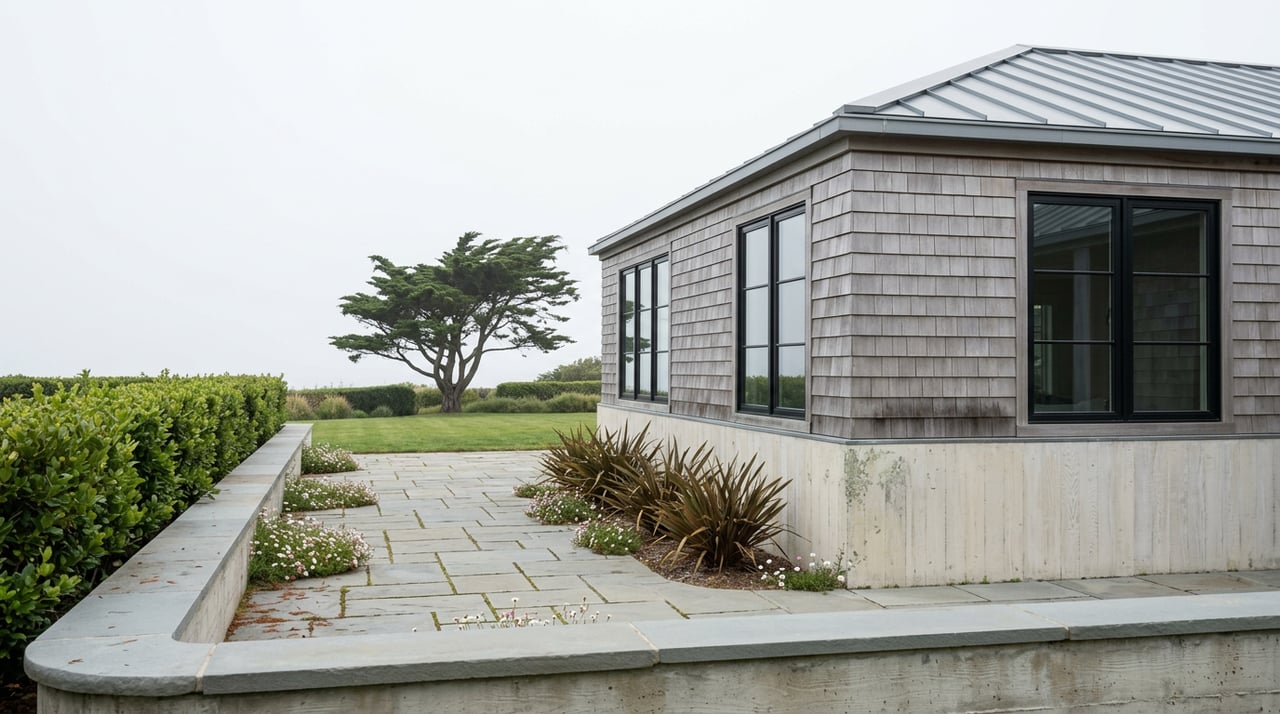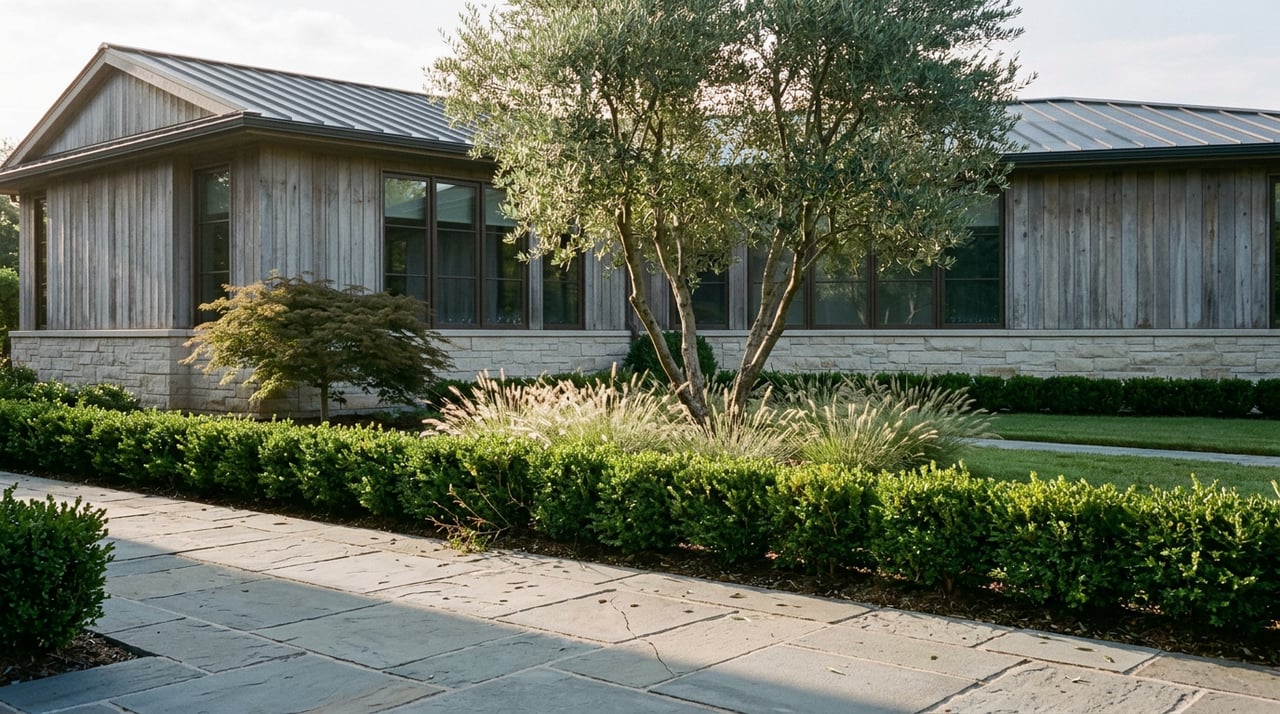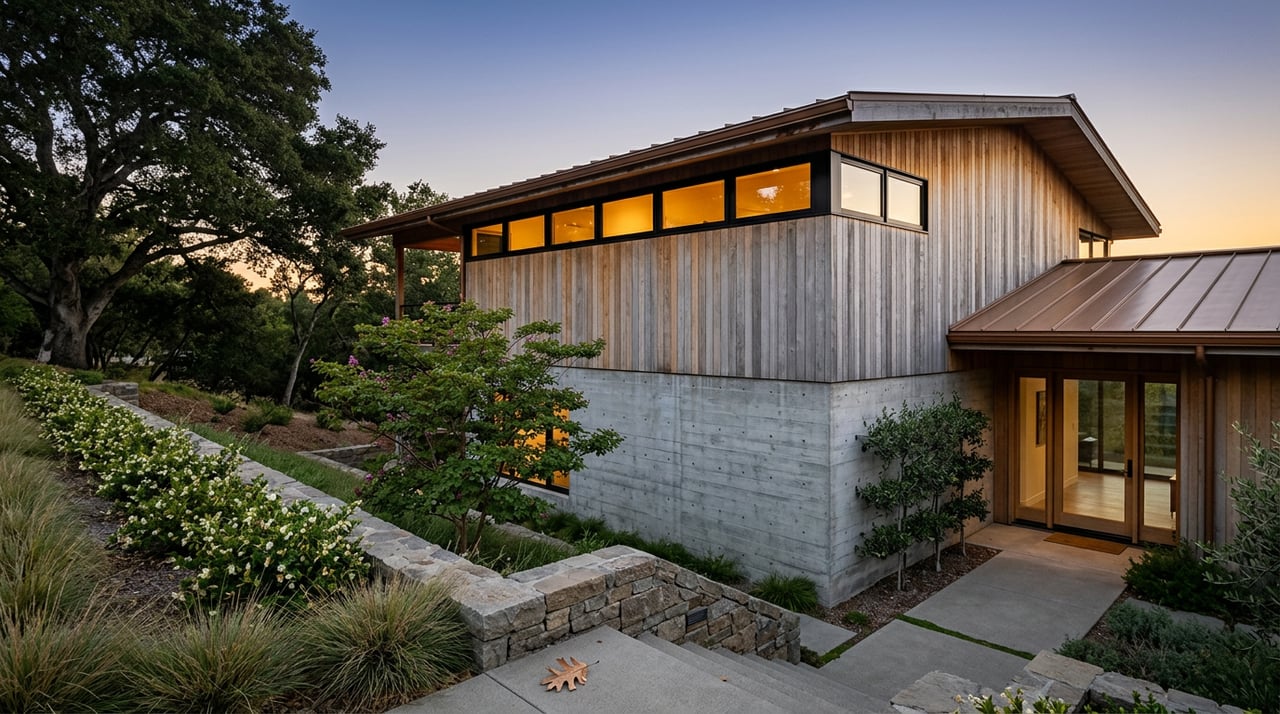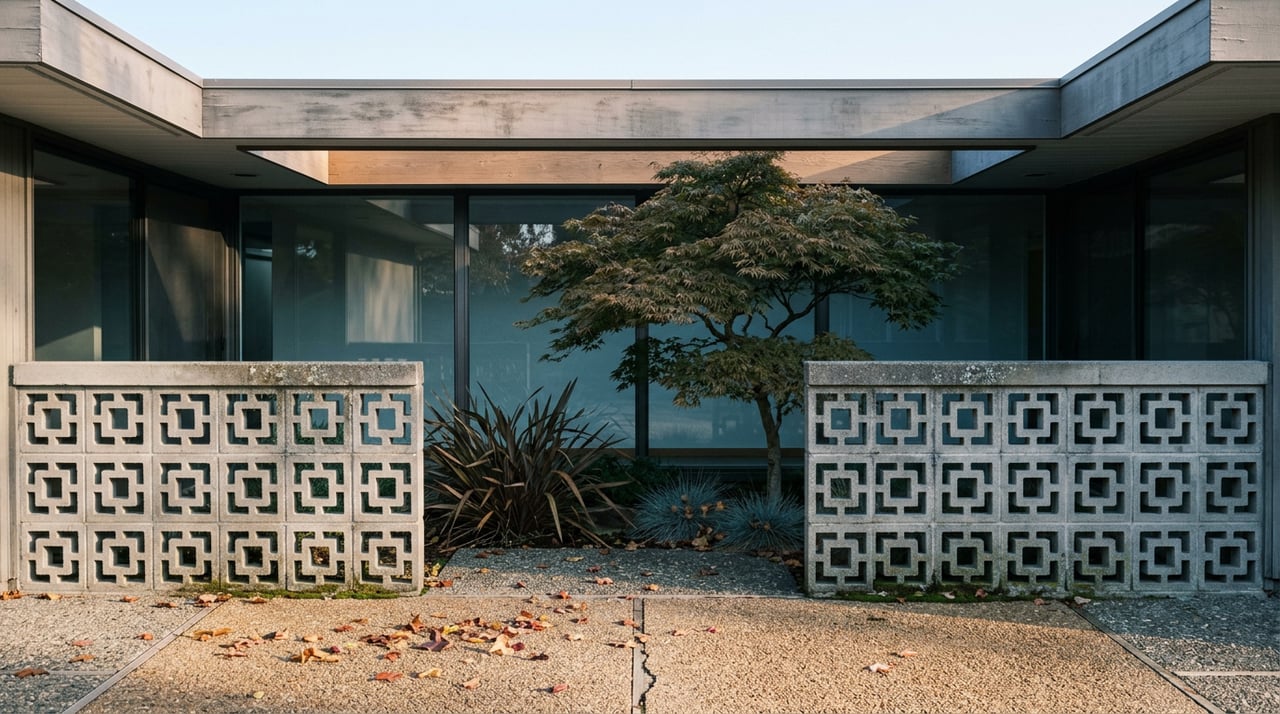
A buyer closes on an Eichler in Palo Alto for the reason most people do: the glass walls, the flat roofline, the way the living room opens straight into the atrium without a hallway in between. Part of what they're paying for is the sightline across the street, the fact that no rooftop deck or upstairs window looks down into their backyard. Then, eighteen months later, a yellow permit notice goes up two doors down for a full second story. A call to the Planning Division reveals the uncomfortable fact: this particular tract was never given the protection the buyer assumed came standard with the word "Eichler."
That gap between assumption and zoning is the thing worth understanding before you write an offer, not after. Eichler describes a roofline and a floor plan. It does not describe a legal boundary. Whether a neighbor can legally build up depends on a line the city drew tract by tract, sometimes only through a portion of a subdivision, and that line does not appear anywhere on a listing sheet.
The name on the disclosure means less than the tract behind it
Palo Alto has roughly 2,700 Eichler homes, the largest concentration built by the developer anywhere. Some of those tracts carry what the city calls a single-story overlay, a zoning designation with real legal force under Palo Alto Municipal Code Section 18.12.110. Where it applies, a second story is not permitted regardless of what standard R-1 zoning would otherwise allow. Greenmeadow and Green Gables have it, and both also sit on the National Register of Historic Places, which adds a second layer of protection on top of the overlay. Triple El has it too, along with portions of Greer Park, Barron Park, Channing Park, Walnut Grove, Meadow Park, and Charleston Meadow.
Other Eichler tracts never got there. Faircourt and Royal Manor rely only on the city's voluntary Eichler Neighborhood Design Guidelines, which recommend keeping rooflines low and discourage two-story additions but do not prohibit them. The Royal Manor fight in 2016 is the clearest illustration of how contested that gap can get. The 203-home tract, part of the Palo Verde neighborhood in south Palo Alto, saw one group of owners petition for overlay protection while another group argued the restriction would strip them of the right to add a second floor to some of the more affordable homes left in the city. The petition initially cleared the required signature threshold and still landed in a packed city council chamber before the process stalled.
That threshold matters if you're evaluating whether a currently unprotected tract might change status later. To create an overlay, at least 80 percent of homes within the proposed boundary must already be single-story, and at least 70 percent of owners in that boundary must sign in support, or 60 percent where properties already carry recorded deed restrictions limiting height. It is not a quick process, and a tract without the overlay today has no guarantee of getting it before you might need it.
| Tract | Protection type | What it means for a future second story |
|---|---|---|
| Greenmeadow, Green Gables | Single-story overlay plus National Register listing | No legal path to a second story regardless of R-1 allowances |
| Triple El | Single-story overlay | Same as above |
| Portions of Greer Park, Barron Park, Channing Park, Walnut Grove, Meadow Park, Charleston Meadow | Single-story overlay, partial coverage | Protection may cover only part of the named neighborhood; verify the specific parcel |
| Faircourt, Royal Manor | Voluntary design guidelines only | A second story is possible through the city's review process |
Two paths through review, and only one still guarantees a hearing
For tracts without overlay protection, a new two-story home or any second-story addition over 150 square feet has to go through one of two city processes. The first is Individual Review, the discretionary path that has existed for years. It requires public notice to neighbors, a comment period, and a hearing before the Planning Director, where privacy, daylight, and massing get evaluated project by project. The ordinance itself is explicit about the limits of what this review is meant to do:
"intended only to mitigate the effects of second story construction on neighboring homes"
It is a mitigation tool, not a veto. Neighbors get a chance to raise concerns, but the process was never designed to block construction that otherwise complies with zoning.
The second path is newer. In February 2025, Palo Alto adopted updated Objective Design Standards, a prescriptive checklist covering massing, window placement, and setbacks. If a project meets every item on that checklist, it can go straight to building permit plan check with no public hearing and no neighbor notice requirement at all. That is the detail worth sitting with if you live in or are buying into a guideline-only tract. The public hearing you might be counting on as your one chance to weigh in is not automatic. It only happens if the applicant chooses the discretionary route instead of designing to the checklist.
Timing follows the same split. Standard residential plan check in Palo Alto typically runs 8 to 16 weeks. Layering Individual Review on top adds meaningful time, with local design-build estimates ranging from roughly four weeks to several months depending on hearing scheduling and how many revision cycles a project needs. Objective Design Standards compliance skips that added window entirely, which gives builders a real incentive to design to the checklist rather than risk a hearing where outcomes are less predictable.
The next complication has nothing to do with Eichlers
As of July 1, 2026, state housing law SB 79 requires California cities to allow greater height and density within roughly a half mile of major transit stops, including Caltrain stations. Palo Alto has three: University Avenue, California Avenue, and San Antonio Road. Under the law, only 10 percent of any newly rezoned area can be shielded through a local historic-resource ordinance, which means not every historic tract inside that radius can be carved out long term.
Some Eichler neighborhoods near the San Antonio station, along with parts of Old Palo Alto near the other two stations, sit inside this zone. City staff flagged the overlap as a planning concern earlier in 2026, and the council has been working through emergency rezoning language to define which sites can still claim an exemption before the state standards fully apply. A single-story overlay drawn decades ago was written against a set of assumptions about local control that a 2026 state mandate did not necessarily preserve. If a specific tract's long-term protection matters to your decision, its distance from those three stations is now part of the question, not just its zoning history.
What to actually check before you write an offer
- Confirm with the Planning Division whether the specific tract, not just the general neighborhood name, carries single-story overlay zoning. A Palo Alto address can say Greenmeadow or Barron Park while only part of that area sits inside the actual boundary.
- Pull the permit history for adjacent parcels. A past Individual Review hearing or Objective Design Standards submittal on a neighboring lot is public record and shows how the process has actually played out on that block.
- Check the parcel's distance from the University Avenue, California Avenue, and San Antonio Road Caltrain stations, since that determines SB 79 exposure regardless of any existing overlay.
- If the light and the layout are the reason you're buying an Eichler, treat the tract boundary as a line item in due diligence rather than an assumption that comes with the architecture.
A short FAQ
If my Eichler tract has no overlay, can a neighbor definitely build a second story? Not automatically. They still have to satisfy either Objective Design Standards or Individual Review, and both address privacy and massing. Neither functions as an outright ban the way overlay zoning does.
Can a neighborhood add overlay protection after the fact? Yes, through the same petition process described above, requiring 80 percent single-story composition and signed support from 70 percent of owners in the boundary, or 60 percent where deed restrictions already exist.
Does the city's Eichler Neighborhood Design Guidelines document carry legal weight? Not unless the property is a locally designated landmark. Planning staff can reference the guidelines during an Individual Review hearing, but on their own they are voluntary and unenforceable.
None of this is a reason to think twice about Eichler ownership in Palo Alto. It is a reason to ask sharper questions before the light and the floor plan close the deal for you. A tract name tells you what a house looks like. It does not tell you what can be built next to it.
If you're weighing a specific Eichler address and want a straight read on what its tract actually protects, Travis Conte & Associates can walk through the zoning history with you before you write the offer. Let's Connect.