If you are deciding between a condo and a townhome in San Mateo, the choice can feel simpler than it really is. On paper, one may sound more private and the other may sound easier to maintain, but the details that shape your daily life often sit in the recorded documents, not the listing headline. This guide will help you look past the label so you can compare ownership structure, HOA obligations, parking, outdoor space, and location with more clarity. Let’s dive in.
Why the label does not tell the whole story
In California, condo is a legal ownership type, while townhome is often just a description of how a home looks or is laid out. According to the California Department of Real Estate, there is no statutory definition of a townhome in subdivision law, and the same side-by-side home style can be created as either a condominium or a planned development.
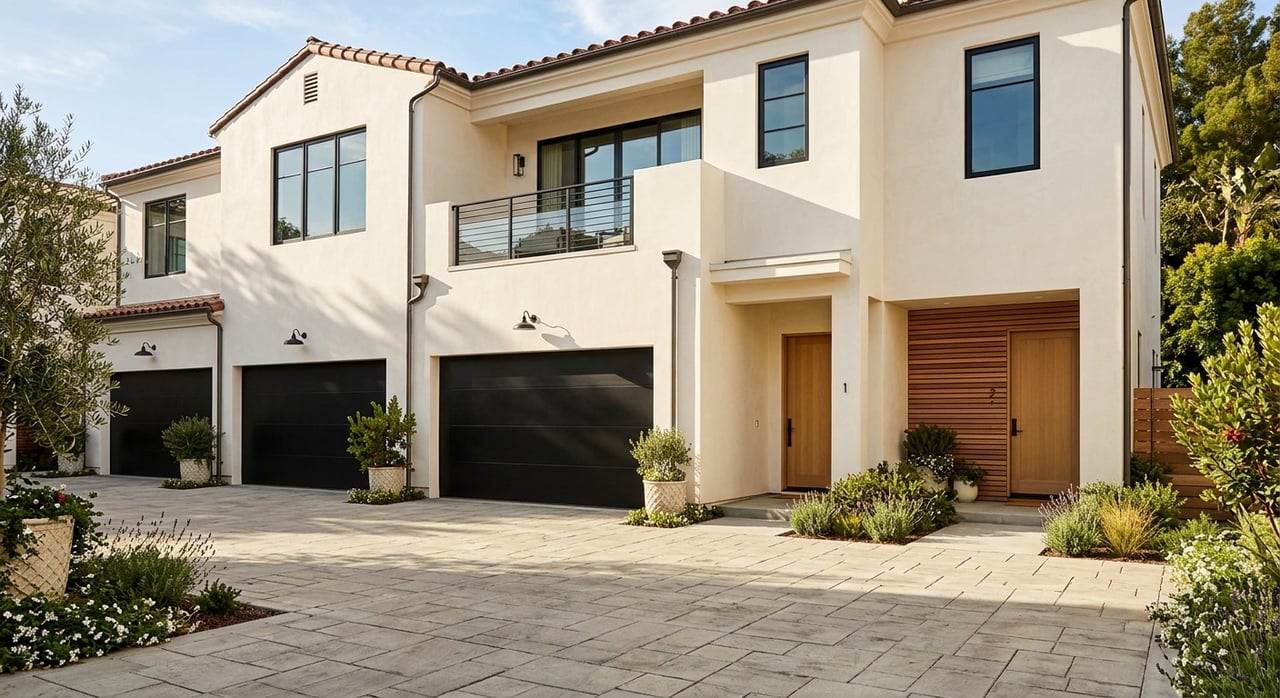
That distinction matters because two homes that look similar can come with very different maintenance duties, HOA structures, and ownership rights. In San Mateo, a property marketed as a townhome may not function the way you expect unless the recorded documents support that setup.
If you are comparing attached homes, the smarter question is not just “condo or townhome?” It is “what exactly do I own, what does the HOA maintain, and what rules apply to this property?”
How ownership works in California
A condominium gives you a separate interest in your unit plus an undivided interest in the common area. In a common interest development, HOA membership is automatic when you buy, and the HOA manages common property while enforcing the CC&Rs and other governing documents.
That means your ownership experience is shaped by more than square footage or floor plan. The CC&Rs, budget, reserve accounts, insurance coverage, and meeting history can all affect cost, maintenance, and future resale.
For San Mateo buyers, this is especially important because attached housing often appears in planned communities and transit-oriented developments where shared spaces, exterior features, and parking arrangements can vary widely. A careful review of the documents gives you a clearer picture than marketing language alone.
Compare maintenance before you compare style
One of the biggest practical differences between homes is not how they look from the street. It is who handles the roof, siding, balconies, patios, and repairs over time.
Under California Civil Code section 4775, the default rule is that the association maintains the common area, the owner maintains the separate interest, and the owner maintains exclusive-use common area appurtenant to the unit, while the association repairs and replaces it unless the declaration says otherwise. In real life, that means each community may divide responsibilities differently.
This is why a townhome-style property does not automatically mean lower HOA involvement, and a condo does not automatically mean the HOA covers everything outside your walls. In some projects, the HOA may handle major exterior components. In others, owners may carry more direct responsibility than expected.
What to review in the HOA documents
Before you buy, focus on the items that affect both monthly cost and future surprises:
- CC&Rs and rules
- HOA budget
- Reserve account funding
- Insurance coverage
- Prior meeting minutes
- History of special assessments
- Repair responsibility for roof, siding, balconies, patios, and parking areas
Monthly HOA dues support ongoing operations and reserve funding for future maintenance and replacement. If regular assessments are not enough, the association can levy special assessments for major repairs or unplanned expenses.
For a buyer trying to make a sound decision, this is where design and data come together. A beautiful home can still be the wrong fit if the reserve health is weak or if repair obligations are unclear.
Privacy, outdoor space, and flexibility
Many buyers start with lifestyle. You may want more separation from neighbors, better outdoor usability, or more control over future updates. Those are valid priorities, but in San Mateo attached housing, the legal setup still matters.
California defines exclusive-use common area to include features like patios, balconies, porches, and doorsteps that serve a single unit. That means the outdoor area attached to your home may feel private, but it may not be owned in the same way as interior space.
This can affect how you use and maintain that space. Associations may regulate balcony and deck use, landscaping, parking, and alterations, so it is worth confirming whether an outdoor area is private property, exclusive-use common area, or fully common area.
Remodel rules can shape long-term fit
If you are drawn to a property because you see future design potential, read the architectural guidelines carefully. The Department of Real Estate notes that associations commonly use architectural rules, and even improvements that seem reasonable still need to comply with the CC&Rs and community standards.
That matters if you plan to update flooring, windows, outdoor finishes, lighting, or other visible elements. A home with good layout potential can be a strong long-term choice, but only if the rules align with how you want to live in and improve the space.
Parking can be a deciding factor in San Mateo
Parking deserves more attention than many buyers give it at first. In a city where attached homes are often found near transit, mixed-use districts, and redeveloping corridors, parking arrangements can vary in ways that affect convenience every day.
Downtown San Mateo has nearly 3,000 public parking spaces, and monthly downtown parking permits are available, though they do not guarantee a space. The city also issues residential parking permits in neighborhoods affected by traffic generators such as schools, hospitals, and businesses.
For condo and townhome buyers, the key is to confirm exactly what comes with the property. Ask whether the space is deeded, assigned, tandem, guest-dependent, or subject to HOA rules that may change how it can be used.
Where condos and townhomes cluster in San Mateo
If location is part of your decision, San Mateo has a clear pattern. City planning documents show that transit-oriented development is concentrated Downtown and around the Hayward Park and Hillsdale Caltrain stations.
Bay Meadows is one of the strongest local examples of this attached-housing pattern. The neighborhood sits on the Caltrain line and includes parks, trails, pocket parks, onsite retail, 18 acres of open space, and miles of trails.
City housing inventory materials also point to attached or mixed-use residential projects in infill locations such as Baywood Place on West Third Avenue, Norfolk Townhomes on South Norfolk, Grant St Condos, and Bay Meadows-area sites. In practical terms, that means many condo and townhome options in San Mateo are tied to redevelopment areas, corridors, and transit-accessible locations rather than lower-density single-family sections of the city.
What this means for your search
If you want a more urban and connected lifestyle, Downtown San Mateo and transit-adjacent areas may rise to the top. Downtown offers a compact core with walkable streets, transit access, and more than 100 dining destinations, which helps explain why buyers often compare it directly with Bay Meadows and other nearby nodes.
If you want a more house-like layout within an attached-home setting, some townhome-style communities may feel like a better fit. Still, the recorded structure, HOA rules, and maintenance split should guide your decision more than the exterior look alone.
San Mateo is also planning for additional housing through its 2023 to 2031 Housing Element, including a Housing Opportunities Overlay District covering about 40 parcels. That broader planning direction reinforces the importance of transit-accessible areas in the city’s future housing growth.
A simple decision framework for buyers
If you want a practical way to compare options, start with how you live day to day. The best fit is usually the property that matches your routine, your tolerance for upkeep, and your long-term value priorities.
Here is a simple framework to use when touring and reviewing disclosures:
A condo may fit best if you want:
- A lower-upkeep lifestyle
- A more urban or transit-connected setting
- HOA involvement in common-area maintenance
- Less personal responsibility for certain exterior elements
- A lock-and-leave setup that supports a busy schedule
A townhome-style property may fit best if you want:
- A more house-like layout
- Side-by-side living rather than above-and-below living
- More separation in entry or outdoor use
- A layout that feels more residential in form
- A balance between attached living and single-family feel
In either case, verify these details
- What the recorded ownership structure actually is
- What the HOA maintains and what you maintain
- Whether reserves appear adequate
- Whether special assessments have occurred
- How parking is assigned and regulated
- Whether outdoor space is usable and clearly defined
- Whether the location fits your commute and daily routine
In San Mateo, those factors usually matter more than the label itself. A well-located condo with strong reserves and clear parking may be the better long-term choice than a townhome-style property with uncertain maintenance exposure. The reverse can also be true.
Focus on fit, not just form
When buyers think clearly about condos versus townhomes, they often realize the real decision is about lifestyle alignment and ownership clarity. The right home is the one that supports how you want to live today while protecting flexibility and value over time.
That is especially true in San Mateo, where attached housing is closely tied to transit, mixed-use development, and HOA-governed communities. If you review the documents with care and weigh location, maintenance, outdoor space, and parking together, you will make a far more informed decision.
A calm, structured comparison usually leads to a stronger outcome than relying on assumptions. If you want help evaluating attached-home options in San Mateo with an eye toward livability, resale, and day-to-day ease, Travis Conte can help you approach the search with intention.
FAQs
What is the main difference between a condo and a townhome in San Mateo?
- In San Mateo, a condo is a legal ownership type, while a townhome is often an architectural description. The recorded documents determine what you own, what the HOA controls, and how maintenance is divided.
Do San Mateo townhomes always have lower HOA involvement than condos?
- No. A townhome-style property can still be part of a common interest development with significant HOA rules, shared maintenance, and monthly dues. The CC&Rs and governing documents control those details.
What HOA documents should you review before buying a condo or townhome in San Mateo?
- Review the CC&Rs, rules, HOA budget, reserve account, insurance coverage, prior meeting minutes, and any history of special assessments. These documents help you understand future costs and maintenance exposure.
How is outdoor space handled in San Mateo condo and townhome communities?
- Outdoor areas like patios and balconies may be exclusive-use common area rather than fully private property. That can affect maintenance duties, alteration rights, and HOA rules for use.
Where are condos and townhomes commonly found in San Mateo?
- City planning documents show attached housing concentrated Downtown and around the Hayward Park and Hillsdale Caltrain stations, with Bay Meadows standing out as a major transit-oriented example.
Why does parking matter when buying a condo or townhome in San Mateo?
- Parking arrangements can differ significantly by property and location. You should confirm whether parking is deeded, assigned, tandem, or governed by HOA rules so you know how it will work in everyday life.